Co-developing a Limpopo Digital Twin
Digital Innovations
Empowering Water Management with Digital Innovation for a Sustainable Future
Empowering Water Management with Digital Innovation for a Sustainable Future
Empowering Water Management with Digital Innovation for a Sustainable Future
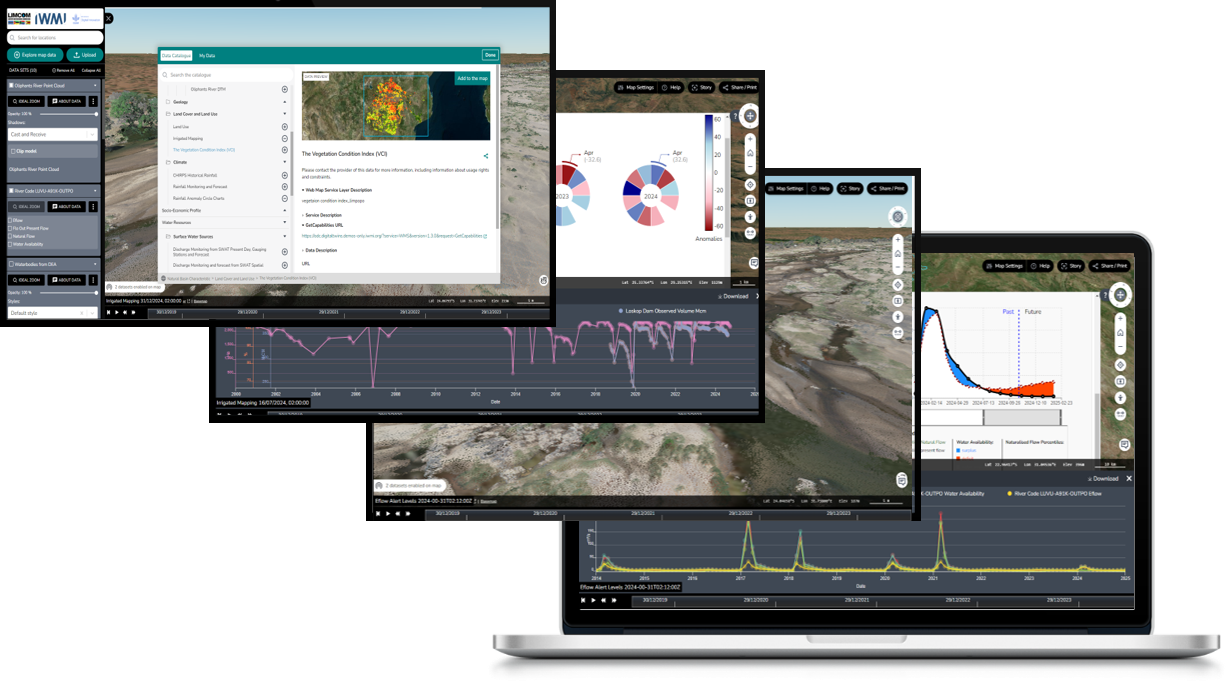
The International Water Management Institute (IWMI) is pioneering a new frontier in water management through the integration of cutting-edge digital twin technology. Our Digital Twin for River Basins initiative aims to create real-time, interactive models of river basins, providing a holistic view of water resources, environmental conditions, and human interactions. This platform empowers stakeholders to make data-driven decisions, predict challenges, and implement sustainable solutions for water security.
By combining data from sensors, satellites, and historical records, our digital twins offer unparalleled insights into the dynamics of river ecosystems. This technology enables governments, researchers, and local communities to collaborate more effectively, ensuring that water resources are managed equitably, sustainably, and transparently.
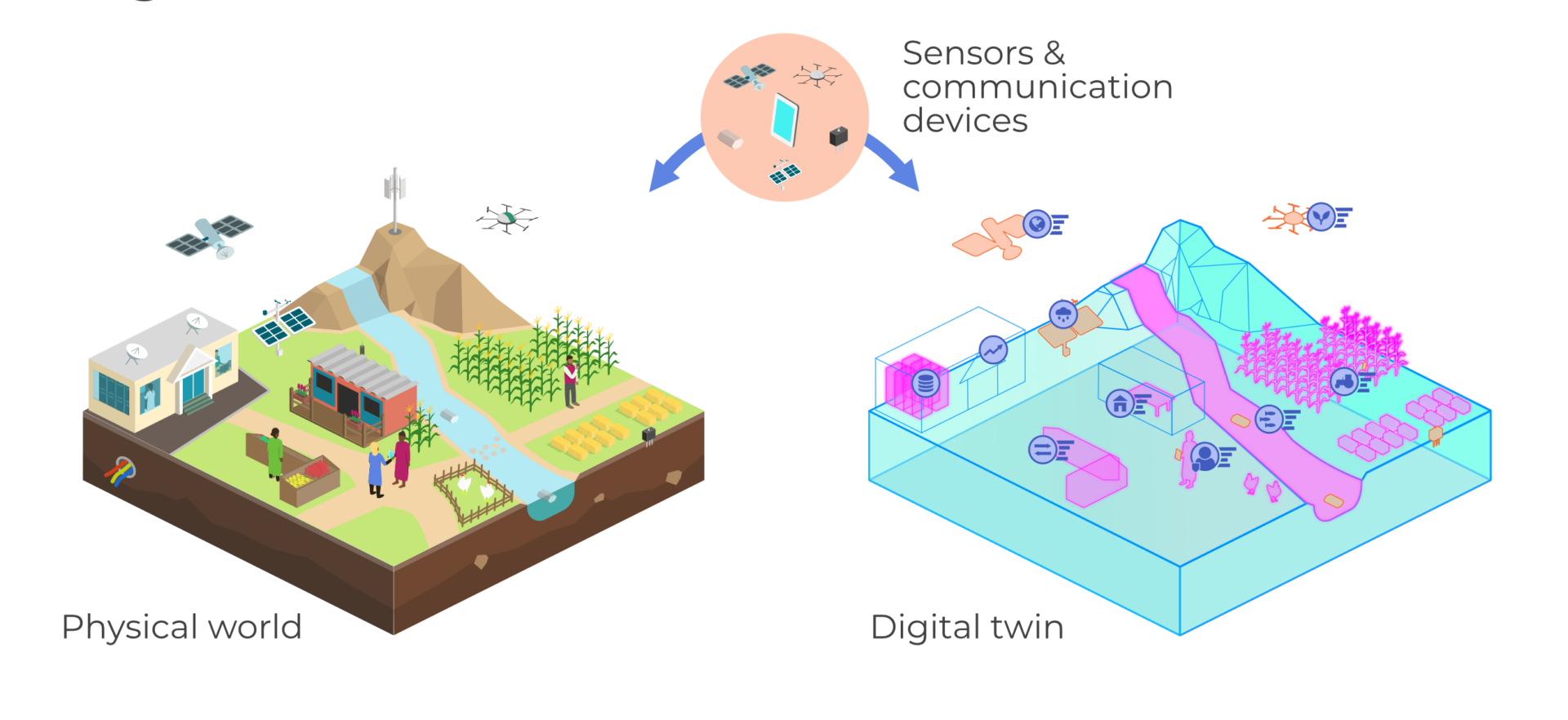
A Digital Twin is a virtual representation of a physical object, system, or process that is created to simulate, analyze, and optimize its real-world counterpart. It essentially acts as a bridge between the physical and digital worlds, allowing for better understanding, monitoring, and management of complex systems.
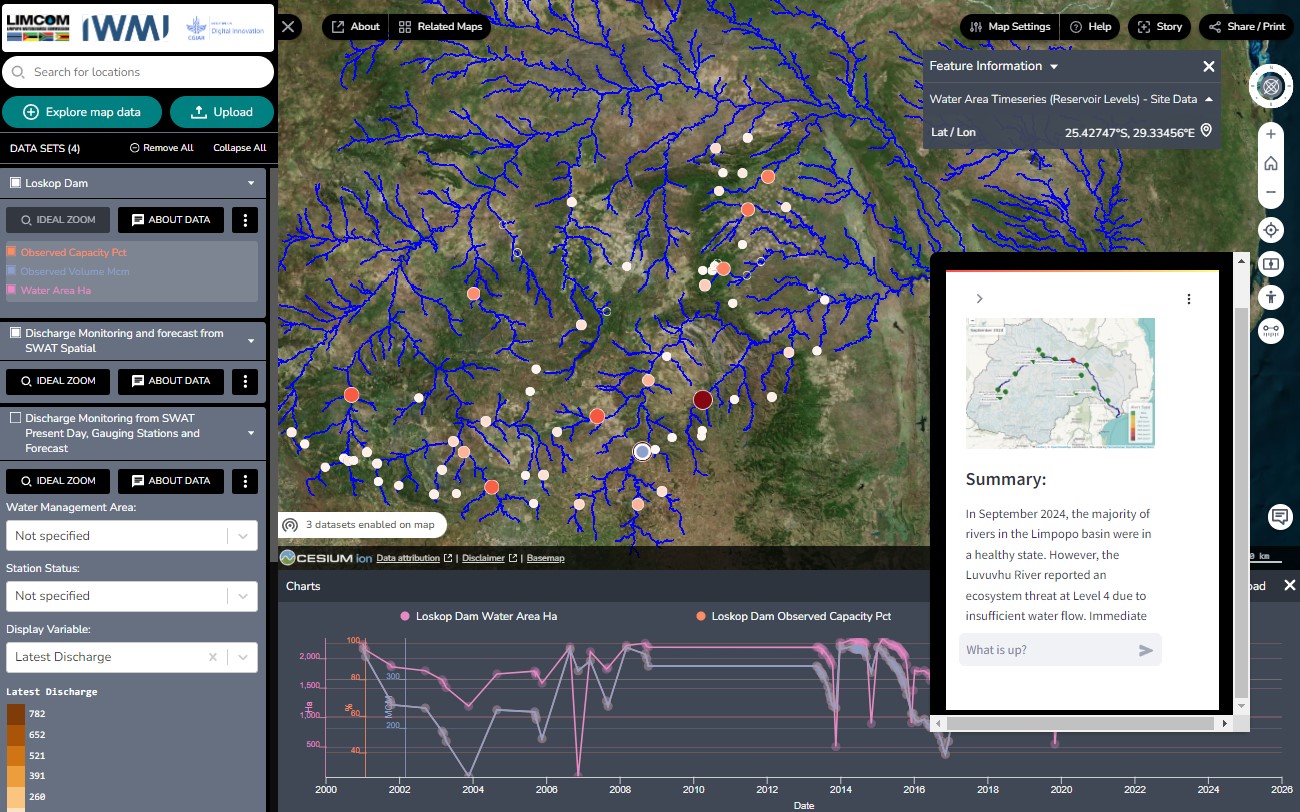
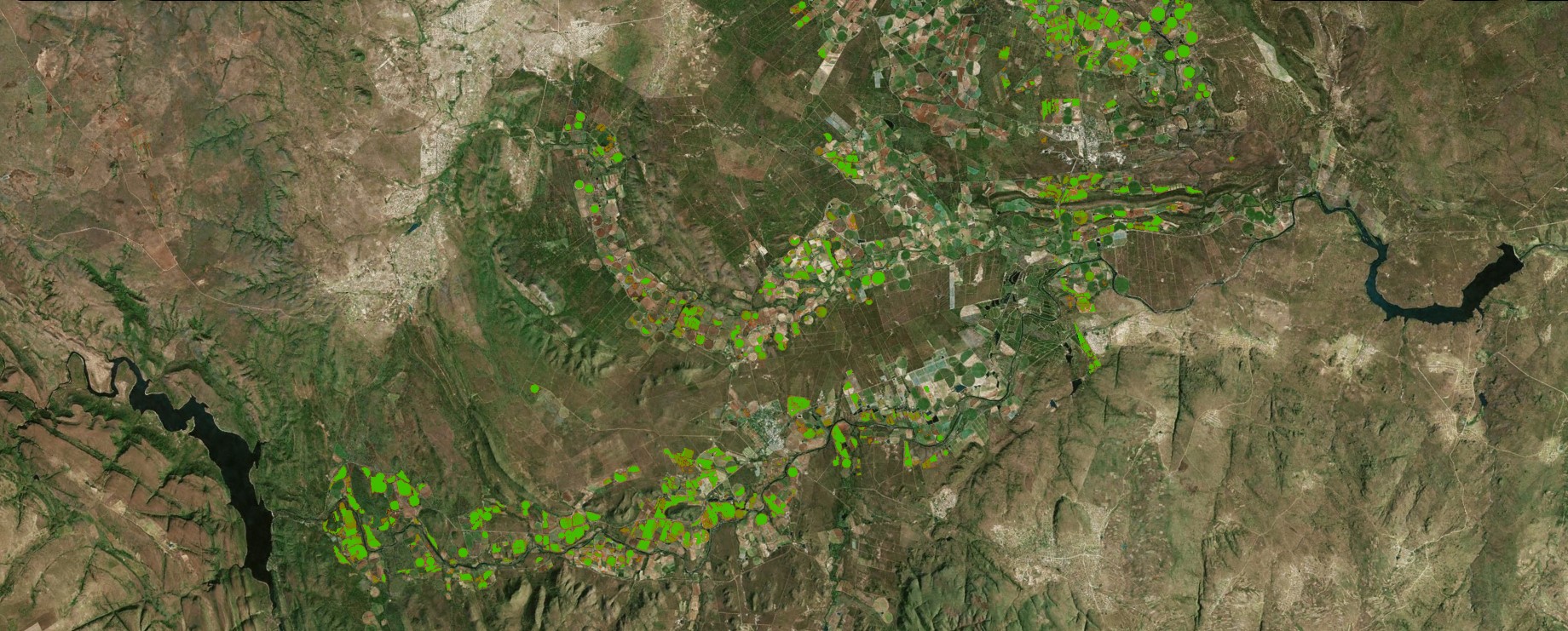
In the context of the Limpopo River Basin, the Digital Twin replicates the entire hydrological system of the basin, including rivers, tributaries, lakes, groundwater systems, and associated infrastructure such as dams and irrigation networks. Here’s how the Digital Twin will eventually work:
The Digital Twin integrates data from various sources such as satellite imagery, ground sensors, weather forecasts, and historical records to create an accurate representation of the current state of the river basin.
Using advanced hydrological modeling techniques, the Digital Twin simulates how water flows through the basin under different scenarios, including rainfall patterns, land use changes, and human activities such as irrigation and dam operations. This allows stakeholders to understand how different factors affect the overall hydrological system.
The Digital Twin continuously monitors near real-time data from the river basin and compares it with the simulated model. This enables stakeholders to detect anomalies, predict potential risks such as floods or droughts, and take proactive measures to mitigate them.
Based on the insights provided by the Digital Twin, decision-makers can evaluate different management strategies and interventions to optimize water resource management in the river basin. For example, they can assess the impact of building new dams, implementing water conservation measures, or restoring wetlands on the overall ecosystem health and water availability.
The Digital Twin serves as a collaborative platform where various stakeholders, including government agencies, water utilities, environmental organizations, and local communities, can interact, share data, and collectively work towards sustainable management of the river basin.


We specialize in leveraging advanced technologies to address water management challenges, with a focus on developing digital twins, AI-based solutions, and collaborative platforms for sustainable river basin management.